Loss of Major Source of Synthetically Derived Nitrogen

Meadowlark

You never know unless you grow 🤠
Moderator
Joined
Feb 5, 2019
Messages
7,149
Reaction score
7,571
Location
East Texas
Hardiness Zone
old zone 8b/new zone 9a
Country
United States
Nitro sourcing has other benefits... ;)
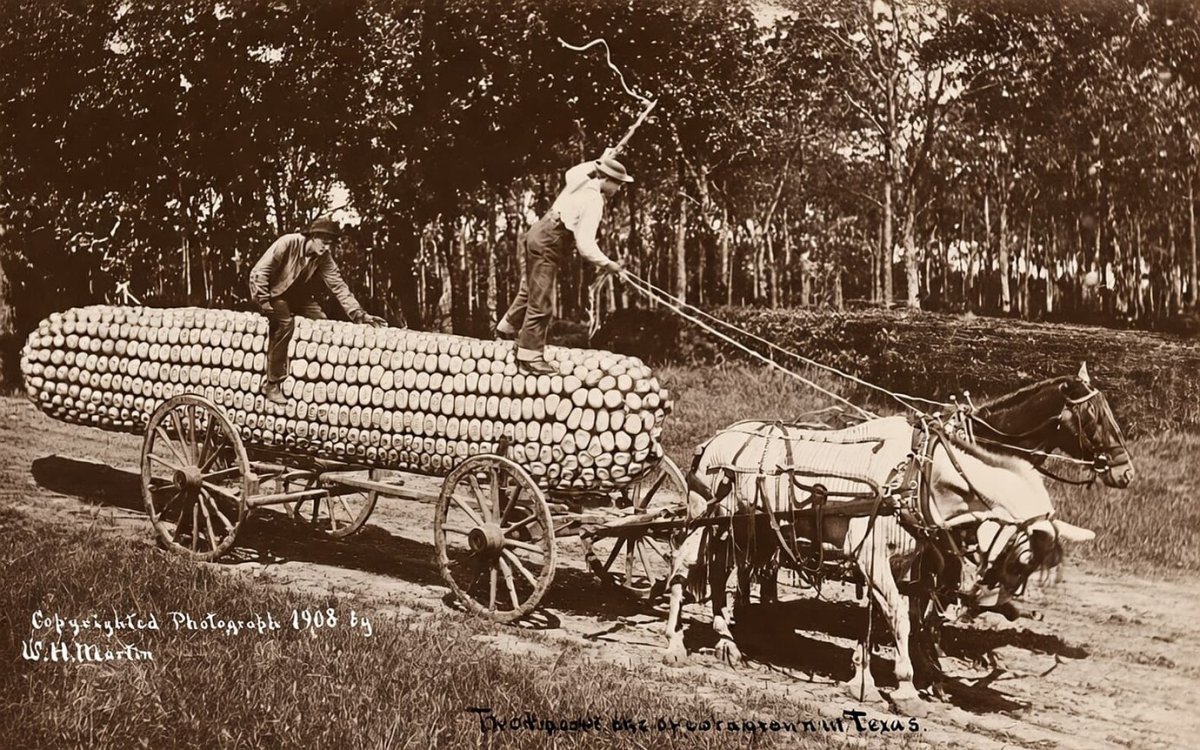
texas corn.jpeg
 

gary350

Full Access Member
Joined
Apr 18, 2016
Messages
856
Reaction score
1,016
Location
Middle Tennessee
Country
United States
Plants take up nitrogen in two forms: Nitrate NO3 and Ammonia NH4. While most plants prefer nitrate in well-aerated soils—where it is easily absorbed and moved to roots—a combination of both forms is usually best for optimal growth.

Synthetic and organic are BOTH identical, NO3 and NH4. I use to be Blind until I took college chemistry. It seems to be a waste of time explaining this most people choose to be blind. NH4 Urea and NH4 Organic are the same nitrogen. NO3 Synthetic and NO3 Organic are the same nitrogen.
 

smitty55

Full Access Member
Joined
Jul 28, 2014
Messages
249
Reaction score
169
Location
Almonte Ontario
Hardiness Zone
5A
Country
Canada
You're comparing apples to pomegranates. Your garden is not producing income, just food for you. Farming in this discussion relates to commercial production. Your practices CAN be scaled up to production agriculture, but costs go way up at scale. It kind of depends on how much you want to pay for food. Costs to farmers for fertilizer and other supplies have a significant impact on prices they MUST get to stay in business.
I don't agree with that, if he wasn't gardening he would have to spend a lot of money to feed his family so everything he grows could easily be called income.
 

roadrunner

Full Access Member
Joined
Jan 5, 2017
Messages
1,873
Reaction score
1,585
Location
Atlantic Beach, Fl
Hardiness Zone
9a
Country
United States
Synthetic and organic are BOTH identical, NO3 and NH4. I use to be Blind until I took college chemistry. It seems to be a waste of time explaining this most people choose to be blind. NH4 Urea and NH4 Organic are the same nitrogen. NO3 Synthetic and NO3 Organic are the same nitrogen.
Yes, synthetic and organically supplied N2 is exactly the same as far as the plant is concerned -- the plant doesn't care.

However, the problem is that when a plant is supplied nitrogen directly from a grower, it breaks down the symbiotic relationship between plants and soil organisms and now that certain organisms are not being fed by the plant's exudates they wither away.

And this has a domino effect on the soil, requiring more and more intervention by the grower, hence we are now feeding plants all kinds of nutrients and dealing with many diseases that seem to become worse every year. Including more and more fungicides that were never needed before.

And when the soil life dies the soil becomes compacted and tilling is a necessity, without tilling the ground is like cement, thus the water just runs off carrying all kinds of synthetic chemicals into our waterways -- hence our problem with dead zones. And the kicker is, the more tilling one does, the more the soil become compacted.

Science is starting to understand that soil organisms in a healthy environment actually provide much of the N2 plants require and that's not including N2-fixing plants and their symbiotic relationship with certain bacteria.

True regenerative farmers use neither synthetic nor organic nitrogen. They don't even spread cow manure. Rather, many of them just run some cows thru the field periodically and let the soil organisms do the rest.
 

Oliver Buckle

Full Access Member
Joined
Feb 13, 2021
Messages
5,974
Reaction score
4,394
Country
United Kingdom
And the kicker is, the more tilling one does, the more the soil become compact
When you till the blades break up the top of the soil, then passing across the bottom of their trajectory they do two things, make a cut between the tilled soil and the untilled, and press down on the untilled. The result in essence it is not dissimilar to having a shallow bed on a partially impenetrable base.
Digging over with a fork breaks the earth away, but also lifts and breaks up the lower earth a little, you lose that separation point that discourages plants from establishing deeper root systems.
Sometimes it doesn't matter, I have used a tiller to prepare ground for a lawn for example, then the roots will not reach to the extent of the tilled earth, also it will stay there and the separation will break down over time, not be reinforced by tilling every year.
 

GFTL

Full Access Member
Joined
Sep 28, 2023
Messages
267
Reaction score
164
Location
Michigan 6b
Country
United States
I'm not privileged to many home garden markets in my area but I am fortunate to have one that grows wonderful sweet corn and I stock up on it every year. Growing corn for most home gardeners isn't practical due to space requirements and in my case peat control. I have too many squirrels in my neighborhood. As for nitrogen, I rely on compost mainly and nitrate water I make in a large fish tank (no longer with fish) that I kept going after I dropped aquaponics for nitrogen hungry plants.
 

Meadowlark

You never know unless you grow 🤠
Moderator
Joined
Feb 5, 2019
Messages
7,149
Reaction score
7,571
Location
East Texas
Hardiness Zone
old zone 8b/new zone 9a
Country
United States
...True regenerative farmers use neither synthetic nor organic nitrogen. They don't even spread cow manure. Rather, many of them just run some cows thru the field periodically and let the soil organisms do the rest.
Bad idea, in my opinion, very bad in a garden for several reasons.

First, the pressure in pounds per sq. inch (psi) of each step of a mature cow runs about 2000 psi. I have used cows effectively to pack the dirt in ponds to prevent them from leaking. Very effective in a pond but not what you want in a garden. The pressure they apply on soil is tremendous. I don't want my garden soil compacted...and I doubt that any thinking farmer who is also a gardener does either.

Second, running some cows through a garden provides raw untreated manure and urine. It contains pathogens which can be fatal if on veggies consumed by humans. Not a good idea at all. Again, I doubt that any thinking farmer wants to take that kind of senseless risk if he/she grows food in that garden for the family.

Third, letting that stuff fall where it may likely will result in highly uneven distribution of the nutrients, including nitrogen. Some spots will be "hot" with nitro, while others will be insufficient in nitro and other nutrients. Not a good idea at all. In fact, a terrible one for a veggie garden. I can't imagine any farmer who is a good gardener would practice that.

Compacted soil, deadly pathogens, uneven distribution of nutrients are all reasons I would never, ever follow that practice in a garden. I seriously doubt any farmer that is also a gardener would follow it either.
 

roadrunner

Full Access Member
Joined
Jan 5, 2017
Messages
1,873
Reaction score
1,585
Location
Atlantic Beach, Fl
Hardiness Zone
9a
Country
United States
All my posts (and this thread) have been about regenerative principles in respect to farmers that farm on thousands of acres, not home gardeners. I realize that home gardeners can more easily manage their growing areas, but those techniques don't scale too well to thousands of acres.

The overall effect of the cows on well managed farms do not compact the soil, because they are only there for a short period of time and then the field is allowed to regenerate. And the deadly pathogens are not a problem in a high biodiverse environment. This is just mimicking what the bison and many other ruminants did when they migrated across North America creating the best farming land.


Meadowlark

You never know unless you grow 🤠
Moderator
Joined
Feb 5, 2019
Messages
7,149
Reaction score
7,571
Location
East Texas
Hardiness Zone
old zone 8b/new zone 9a
Country
United States
The claims
...The overall effect of the cows on well managed farms do not compact the soil, because they are only there for a short period of time and then the field is allowed to regenerate.
I have hay fields that have never seen synthetic fertilizers or cows in this century and before. They get one cutting per year and regenerate the remainder of the year. I do not "spread" cow manures on them, nor do I allow cows on them to compact the soil, even for short periods of time. I know many other ranchers in this area do the identical same thing...a friend has thousands of acres that he very profitably runs cattle on, and he never allows the cows in the hay fields.

It is nothing new, just common sense. Maybe we should come up with a fancy name for this and make y-tube videos promoting it.
 

roadrunner

Full Access Member
Joined
Jan 5, 2017
Messages
1,873
Reaction score
1,585
Location
Atlantic Beach, Fl
Hardiness Zone
9a
Country
United States
The claims

I have hay fields that have never seen synthetic fertilizers or cows in this century and before. They get one cutting per year and regenerate the remainder of the year. I do not "spread" cow manures on them, nor do I allow cows on them to compact the soil, even for short periods of time. I know many other ranchers in this area do the identical same thing...a friend has thousands of acres that he very profitably runs cattle on, and he never allows the cows in the hay fields.

It is nothing new, just common sense. Maybe we should come up with a fancy name for this and make y-tube videos promoting it.
I also don't have cows nor do I spread manure and I have deep black soil in Florida where all my neighbors have gray, sandy lifeless sand/dirt.

I didn't mean to say that cows or other ruminates are a necessary tool to build soil. I was just going over some of the six principles of Regenerative Agriculture that Gabe Brown lists; however, he's even said that animal integration isn't absolutely necessary. And I do know there are Regenerative farmers that don't use cattle and they are doing pretty good. I guess it's true, there's more than one way to skin a cat.

It's just that the farmers that do use animals in a certain way that mimics nature see far faster turn around of degraded soil and overall results, but it can happen fairly fast without animals, I know it has on my property. And this is based on scientific research as noted by Carbon Cowboys.


EDIT: I have to put out a little bit of nuance. I say I don't use animal integration, but in fact I do, just not intentionally. Let's not forget that many of the soil organisms are in the Animal Kingdom and then you got the animals, such as birds that make an appearance.

I imagine if those things were not integrated into my growing areas my soil would be far worse off today. I often wonder how much manure is put into the soil by all the rollie pollies and countless other organisms, including microorganisms.
 
Last edited:

Meadowlark

You never know unless you grow 🤠
Moderator
Joined
Feb 5, 2019
Messages
7,149
Reaction score
7,571
Location
East Texas
Hardiness Zone
old zone 8b/new zone 9a
Country
United States
...I didn't mean to say that cows or other ruminates are a necessary tool to build soil. I was just going over some of the six principles of Regenerative Agriculture that Gabe Brown lists; however, he's even said that animal integration isn't absolutely necessary.
My 12-acre hayfield has been producing roughly 60,000 pounds of quality hay every year for decades. The only variable in production is rainfall amounts and timing. No cows ever graze it, nor trample and compact the soil. Absolutely nothing goes on those fields except rain and sunshine and hay baling equipment once a year. If that is not true regenerative farming, then nothing qualifies for that mantel in my view.

My cattle herd produces approximately 25,000 pounds of beef annually grazing on grass and hay which is completely free of synthetics/cides. Again, completely regenerative and has been for several decades.

The regenerating fish in 5 ponds provide food for the table as well as great entertainment and nutrients for the garden soil...all completely free of any synthetics/cides.

My veggie garden feeds my family over 90% of veggies we consume without the use of any synthetics/cides. In turn, that garden is fed by the well composted manure and urine from the cows which is applied generously to the garden as well as composted fish remains which replenish the nutrients in the soil. It is virtually a closed loop system fueled only by rain and sunshine.

If someone wants to say I'm not "true regenerative" or whatever "Term" is cool at the moment, I could really care less. This approach works for me...and could work for anyone. Nothing magic, nothing exotic, just what I consider a common-sense approach to a very enjoyable lifestyle.

Hence, the loss of synthetically sourced nitrogen as claimed to start this thread is of little or no consequence to me...other than a fun discussion. 🤠
 

roadrunner

Full Access Member
Joined
Jan 5, 2017
Messages
1,873
Reaction score
1,585
Location
Atlantic Beach, Fl
Hardiness Zone
9a
Country
United States
As I said, there is more than one way to skin a cat and I also agreed that one doesn't have to include ruminants to be regenerative.

As for the soil compaction problem with cattle, that is a problem if they are not managed properly. Obviously if youi leave cattle in one area too long the ground will become compacted. However, the regenerative farmers/ranchers that manage their cattle correctly, not only don't worry about soil compaction, but they note the advantages of cattle pouncing thru their fields. Most noteworthy are cattle create little divits that catch water, they trample plant matter, putting them firmly into the soil to start the decomposition process. And there is many other advantages that ranchers list of integrating cattle onto fields to regenerate.

This couple manages 5,000 heads and they don't worry about compaction.


Meadowlark

You never know unless you grow 🤠
Moderator
Joined
Feb 5, 2019
Messages
7,149
Reaction score
7,571
Location
East Texas
Hardiness Zone
old zone 8b/new zone 9a
Country
United States
...This couple manages 5,000 heads and they don't worry about compaction.
I don't worry about compaction either. I use it to my advantage...common sense.

The more videos you post, the more convinced I am that I need to make some myself. I'll call them something like "Comon sense resilient farm lifestyle" 🤠

CSRFL: Incorporates elements from the best practices in Agriculture Today and Yesterday...

Organic Farming
Regenerative Agriculture
Sustainable / Conservation Agriculture
Integrated Farming Systems
Aquaculture
Urban Farming
.
Permaculture
Integrated Pest Management (IPM)
.
Agroforestry.
Pasture-Based / Rotational Grazing
Controlled Environment Agriculture (CEA)
Conservation Agriculture
Agroforestry
Agricultural Biotechnology
Permaculture


:
 
Joined
Jun 7, 2025
Messages
3
Reaction score
3
Location
Denmark
Hardiness Zone
8a
Country
Denmark
As synthetic nitrogen becomes more problematic or scarce, focusing on the biology of the soil is the only sustainable way forward. Regenerative farming mimics natural ecosystems to build that fertility back up naturally.

I came across this article recently (it's in Danish, but worth a look/translate) regarding the Save Soil movement and the global soil exhaustion crisis: https://saesonvis.dk/botanik/save-soil-bevaegelsen-advarer-om-global-udpiningskrise. It supports your idea that we are being pushed toward a much-needed change in how we treat our land.
 

Ask a Question

Want to reply to this thread or ask your own question?

You'll need to choose a username for the site, which only take a couple of moments. After that, you can post your question and our members will help you out.

Ask a Question

Staff online

Members online

Forum statistics

Threads
30,283
Messages
294,588
Members
15,688
Latest member
bobloes

Latest Threads

Top