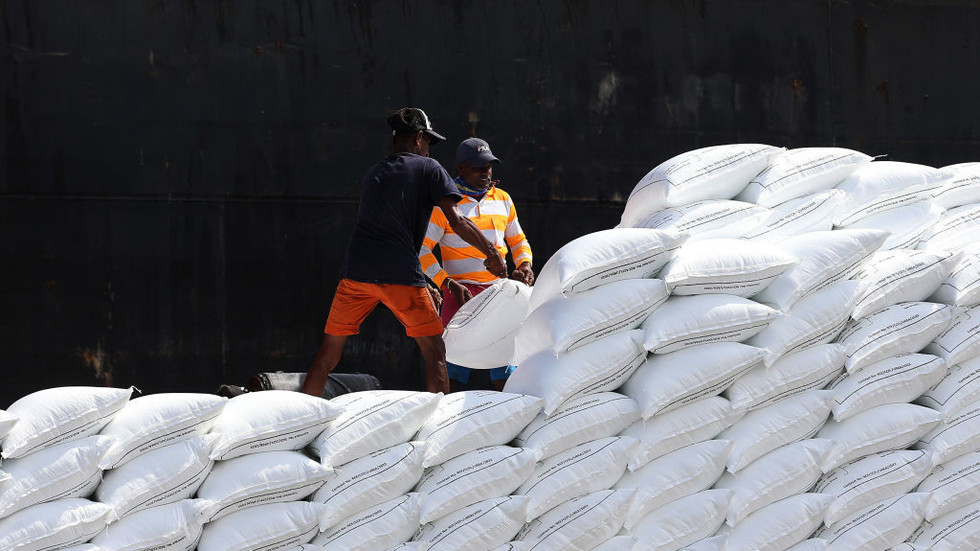
Loss of Major Source of Synthetically Derived Nitrogen

roadrunner

Full Access Member
Joined
Jan 5, 2017
Messages
1,819
Reaction score
1,541
Location
Atlantic Beach, Fl
Hardiness Zone
9a
Country
United States
Will this force the adoption of Regenerative Farming? I see this as a good thing, brought about by a stupid action.


Martin Mikulcik

Full Access Member
Joined
Jan 3, 2026
Messages
363
Reaction score
353
Location
Missouri
Hardiness Zone
5b
Country
United States
Synthetic nitrogen isn't going anywhere. If the price is going up it has more to do with foreign policy moves and inflation than actual supply shortages.

Nobody is producing food cheaper organically even if the price of urea quadruples. The highest corn price of all time is significantly cheaper than organic corn. And the deceiving part about organic corn is the nitrogen is often sourced from non renewable chilean nitrate or from manure thats derived from synthetic fertilizer originally.

Synthetic N is the most renewable resource we have. All it takes is electricity.

Nitrogen fixing legumes are great, and you can get great yields using them, but best case scenario it's like twice as much work to grow an Alfalfa crop just to till it under in a couple years. And alfalfa doesn't grow everywhere.


The rest of the world is building more fertilizer plants to become independent from the mess we got going on.
 

roadrunner

Full Access Member
Joined
Jan 5, 2017
Messages
1,819
Reaction score
1,541
Location
Atlantic Beach, Fl
Hardiness Zone
9a
Country
United States
Synthetic nitrogen isn't going anywhere. If the price is going up it has more to do with foreign policy moves and inflation than actual supply shortages.

Nobody is producing food cheaper organically even if the price of urea quadruples. The highest corn price of all time is significantly cheaper than organic corn. And the deceiving part about organic corn is the nitrogen is often sourced from non renewable chilean nitrate or from manure thats derived from synthetic fertilizer originally.

Synthetic N is the most renewable resource we have. All it takes is electricity.

Nitrogen fixing legumes are great, and you can get great yields using them, but best case scenario it's like twice as much work to grow an Alfalfa crop just to till it under in a couple years. And alfalfa doesn't grow everywhere.


The rest of the world is building more fertilizer plants to become independent from the mess we got going on.
I wasn't saying that it's going away because of real physical supply shortages, rather because of foreign policy -- that was the whole point.

However, I was probably a little too optimistic in saying, "Will this force the adoption of Regenerative Farming?"

What I should have said is that this current supply shortage/price increase (which we haven't fully experienced yet), hopefully will encourage others to adopt Regenerative practices.

Also, I make a big distinction between Organic and Regenerative Agriculture. I'm no fan of Organic farming as operated/managed under the USDA.

Regenerative Ag is totally different than Organic farming.
 

Meadowlark

You never know unless you grow 🤠
Moderator
Joined
Feb 5, 2019
Messages
6,084
Reaction score
6,176
Location
East Texas
Hardiness Zone
old zone 8b/new zone 9a
Country
United States
...Nobody is producing food cheaper organically even if the price of urea quadruples. The highest corn price of all time is significantly cheaper than organic corn. And the deceiving part about organic corn is the nitrogen is often sourced from non renewable chilean nitrate or from manure thats derived from synthetic fertilizer originally.
@Martin Mikulcik I grow most of the corn my family consumes...so I was interested in your remarks re corn... for the sake of friendly discussion. 🤠

If the term "organic corn" to you means corn grown completely without any synthetics or chemicals in the form of pesticides, herbicides, or fungicides or any other "cide" , then that is what I grow. Cost has absolutely nothing to do with how I grow it.

However, my only cost is the seed...since I grow a hybrid variety, I cannot usefully save the seeds. The nitrogen for my corn is sourced from 100% renewable sources. Most of it is a by-product of the cows I raise which would otherwise just go back into the environment. Some of it comes from fish out of my ponds which is again 100% renewable.

So many people get hung up on terms. Terms can have any meaning anyone wants to assign to them...and that is way too often the case in gardening.

I prefer to NOT use those terms. Rather, I use what my ranch and Nature provide and renew it each year. I have as near a closed system as possible. As relates to corn, only the seed comes from outside the system.

I grow it for taste and nutrition...not for cost savings but only the cost of the seed is in play. I dare say "the highest corn price of all time" is significantly off the charts higher than an ear of my home-grown corn and more importantly cannot remotely compare in nutrition and taste to my garden-fresh corn.
...Synthetic N is the most renewable resource we have. All it takes is electricity.
All my nitrogen takes to renew is sunshine and water...and if we don't have those, then our problems will be catastrophic indeed.
 

Martin Mikulcik

Full Access Member
Joined
Jan 3, 2026
Messages
363
Reaction score
353
Location
Missouri
Hardiness Zone
5b
Country
United States
I grow most of the corn my family consumes...so I was interested in your remarks re corn for the sake of friendly discussion. 🤠

If the term "organic corn" to you means corn grown completely without any synthetics or chemicals in the form of pesticides, herbicides, or fungicides or any other "cide" , then that is what I grow. Cost has absolutely nothing to do with how I grow it.

However, my only cost is the seed...since I grow a hybrid variety, I cannot usefully save the seeds. The nitrogen for my corn is sourced from 100% renewable sources. Most of it is a by-product of the cows I raise which would otherwise just go back into the environment. Some of it comes from fish out of my ponds which is again 100% renewable.

So many people get hung up on terms. Terms can have any meaning anyone wants to assign to them...and that is way too often the case in gardening.

I prefer to NOT use those terms. Rather, I use what my ranch and Nature provide and renew it each year. I have as near a closed system as possible. As relates to corn, only the seed comes from outside the system.

I grow it for taste and nutrition...not for cost savings but only the cost of the seed is in play. I dare say "the highest corn price of all time" is significantly off the charts higher than an ear of my home-grown corn and more importantly cannot remotely compare in nutrition and taste to my garden-fresh corn.

All my nitrogen takes is sunshine and water...and if we don't have those, then our problems will be catastrophic indeed.
Yes and i fully support what you do. Nitrogen fixation is viable, in the sense that you will get great sustainable yields. And the manure and compost can keep you going indefinitely, so long as it remains a closed system. There's something awesome about that level of self sufficiency. And it's well suited to a home garden level.

But farmers can't maintain a closed system. They're shipping out hundreds of bushels an acre every year. Those nutrients have to be replenished. The nitrogen is the easy one. It's in the air and all it requires is electricity to put back in the soil. Lightning puts something like 10lbs an acre N annually. (It's a little more complicated than just electricity because the more energy efficient process is making ammonia from very clean hydrogen derived from natural gas, but if natural gas wasn't there we could get the hydrogen from electrolysis of water or go back to nitric acid production which doesn't require any natural gas, which isn't scarce for this purpose anyway)

So i don't see why urea or anhydrous is anything we should be moving away from. That might not have even been the point @roadrunner was making. There's just this idea, very popular to the Internet, that chemical equals bad. Many times it's true, especially when it comes to eating residual pesticides and herbicides and fungicides, but synthetic nitrogen is a major factor in global food security and i really don't know what concerns anybody about it's use.

Why not legumes? Basically because they take time, land and energy and it's easier to synthesize the nitrogen and get twice as many crops. For small scale non critical applications, legumes make free nitrogen. But I'd rather see the land be more productive than try to be a purist to some romantic idea of how it was in the good ol days. For a gardener, even a bold gardener who grows all his food, it can make sense to be independent from the industry.

And i think you're talking about sweet corn which has a much higher labor to fertilizer ratio. Most of the cost of an ear of sweet corn is getting it to the consumer before it spoils. Gardening is awesome because you get really high quality vegetables. You pick a variety that might not be suited for commercial production but can't be beaten. And it's a shame consumers bought based on looks and swayed the market so much. I raise old chicken breeds and there's less white in the egg but the yolk is very comparable to grocery store eggs. Basically modern eggs are more watery than they used to be. And we wet age meat to sell that extra oz of water. Anyone over the age of 50 can tell you beef ain't what it used to be. And all the produce in the store is less nutritional because it's been bred for absolute maximum yields which equates to more water/less nutrient density. Are they still selling jumbo strawberries that are hollow.

Field corn has traded at a record high of 8 some dollars a bushel. That's 17 cents an ear or so. Organic field corn is 20% higher than that record and currently corn is 4.60 a bushel. If you ate 2000 calories of field corn a day for a year, it would only cost 40$. I cannot produce 8 bushels "organically" for 40$

I'm not saying modern agriculture isn't wasteful. There's runoff, there's erosion. My grandfather saw all the erosion happening post wwii and made sure to let the trees grow up around the creeks, and have proper fencerows. Short term we lose some yields but long term we aren't to blame for all the top soil washing into the gulf of mexico, erm america.

We can afford to sacrifice yield for a good reason. Heck, we're putting like 40% of our corn into automotive ethanol in a net negative energy production. I think you get the point

And I'm the kind of guy that grows cabbages and watches the caterpillars destroy them because if I'm going to eat pesticides, i might as well go to the store. I do get some yield to be fair.

We can breed plants resistant to insects and fungus and we can get in the garden with a hoe and weed. And crop diversity would do us some good. And you know I'm working on these things. If you want a non sweet native strong flavored plum (makes top notch cherry pies) that has absolutely no pest problems let me know

On a side note, i often see people say manure is too hot to put directly on plants and i think what they mean to say is, dont plant directly in straight fresh manure. But you'll get better nutrient conversion if you just set the "hot" manure around the plant like mulch, still growing in good soil, and you won't lose the initial water soluble nutrients

 

Meadowlark

You never know unless you grow 🤠
Moderator
Joined
Feb 5, 2019
Messages
6,084
Reaction score
6,176
Location
East Texas
Hardiness Zone
old zone 8b/new zone 9a
Country
United States
...Field corn has traded at a record high of 8 some dollars a bushel. That's 17 cents an ear or so.
I'm intrigued by this cost discussion. First of all, field corn cannot in any way compare to the taste of sweet corn...but in terms of cost...

200 seeds of honey select triple sweet corn costs about $7.

My germination rate varies like 75% to 90% rate. For sake of discussion let's just assume a very low 50% rate. Out of those 100 stalks of corn, losses along the way to weather and other factors probably take out 10%.

I sometimes get three ears per stalk but two is more likely so continuing to take the worst-case approach that would be 180 ears of corn. That would be an exceedingly low harvest rate for me but to continue the discussion... 180 ears at $7 is just under 4 cents per ear. QED as they say.
 

Meadowlark

You never know unless you grow 🤠
Moderator
Joined
Feb 5, 2019
Messages
6,084
Reaction score
6,176
Location
East Texas
Hardiness Zone
old zone 8b/new zone 9a
Country
United States
.... That might not have even been the point @roadrunner was making.
No, my guess was it was entirely a political point re "stupid action".

Politics has no place here on a Gardening Forum. It should be 100% avoided in my opinion and in the rules of this Forum.

The discussion of nitrogen sourcing is however very much relevant to our gardening experience and one I love to participate in...so thanks for that @Martin Mikulcik and let's continue please.
 

Meadowlark

You never know unless you grow 🤠
Moderator
Joined
Feb 5, 2019
Messages
6,084
Reaction score
6,176
Location
East Texas
Hardiness Zone
old zone 8b/new zone 9a
Country
United States
... There's just this idea, very popular to the Internet, that chemical equals bad. Many times it's true, especially when it comes to eating residual pesticides and herbicides and fungicides, but synthetic nitrogen is a major factor in global food security and i really don't know what concerns anybody about it's use.
I'm not sure it is just an internet thing @Martin Mikulcik . I can't recall ever talking to someone about my gardening that thinks chemical is good for the home gardener.

Yes, most reasonable people would agree that in our present circumstance with the World population, commercial farmers here really don't have much choice. We home gardeners have every choice.

On several occasions on this Forum, we have had very interesting and sometimes heated discussions about Nitrogen sourcing. One side says in essence, Nitrogen is Nitrogen no matter where it is sourced. The other side says it does matter where it is sourced to the ongoing soil health, the nutrient density of veggies grown in it, and the taste of those same veggies.

As an aside, on your point about direct application of "hot compost" to plants, I prepare my soil well in advance of planting usually customizing for type of veggie. I never add "hot compost" to plants during the growing process. In fact, I never add any composted manure to the plants during the growing. Nitrogen sourced from manures is slow to be released to plants...a big difference from chemical sourced Nitrogen.

Once planted in my prepared soil, the plants get only what the soil provides. Works for me...and has for many decades.
 

Oliver Buckle

Full Access Member
Joined
Feb 13, 2021
Messages
5,609
Reaction score
4,099
Country
United Kingdom
I'm intrigued by this cost discussion. First of all, field corn cannot in any way compare to the taste of sweet corn...but in terms of cost...

200 seeds of honey select triple sweet corn costs about $7.

My germination rate varies like 75% to 90% rate. For sake of discussion let's just assume a very low 50% rate. Out of those 100 stalks of corn, losses along the way to weather and other factors probably take out 10%.

I sometimes get three ears per stalk but two is more likely so continuing to take the worst-case approach that would be 180 ears of corn. That would be an exceedingly low harvest rate for me but to continue the discussion... 180 ears at $7 is just under 4 cents per ear. QED as they say.
This takes no account of all the extra costs to farmers of machinery, fuel, labour, and probably taxation, which the home gardener does not pay.
 

roadrunner

Full Access Member
Joined
Jan 5, 2017
Messages
1,819
Reaction score
1,541
Location
Atlantic Beach, Fl
Hardiness Zone
9a
Country
United States
We don't need to keep following the Wall Street model of farming. Doing away with synthetic, fossil fuel derived chemicals (not just N2), because it is not required for farming, but also because it's destroying our land. The conventional method works well in the beginning, but over time it only destroys the soil and soil is much more than simply a medium to hold up the plants.

This isn't just for small-time farmers as shown in the video below how a farmer that grows on thousands of acres -- Gabe Brown. And there are many more examples of farmers breaking away from big industry.

Large scale farming is not only destroying the land, it's also destroying farmers with massive debt, because it goes way beyond just the cost of N2 fertilizers. Many of the insecticides, herbicides and fungicides are also fossil fuel derived. Not to mention gas prices are going up, but as high as gas prices are, it's much worse for diesel, which farms mostly use.

Keep going with conventional farming and you're only making large industries richer and us poorer. You're being suckered if you fall for their bullshit that there's only their way of farming to farm.


Meadowlark

You never know unless you grow 🤠
Moderator
Joined
Feb 5, 2019
Messages
6,084
Reaction score
6,176
Location
East Texas
Hardiness Zone
old zone 8b/new zone 9a
Country
United States
This takes no account of all the extra costs to farmers of machinery, fuel, labour, and probably taxation, which the home gardener does not pay.
This home gardener pays taxes and pays them whether I garden or not. Labor in my case is out of enjoyment. I would do it regardless. Machinery I have I would have whether or not I gardened. Fuel used to work the corn raised here is completely insignificant.

Hence, I feel justified in ignoring them in this discussion on costs. They are irrelevant.

Price, on the other hand, that commercial farmers receive depends primarily on market conditions. Supply and demand.
 

cpp gardener

Full Access Member
Joined
Nov 13, 2019
Messages
2,609
Reaction score
1,228
Location
Riverside/Pomona CA
Hardiness Zone
9
Country
United States
You're comparing apples to pomegranates. Your garden is not producing income, just food for you. Farming in this discussion relates to commercial production. Your practices CAN be scaled up to production agriculture, but costs go way up at scale. It kind of depends on how much you want to pay for food. Costs to farmers for fertilizer and other supplies have a significant impact on prices they MUST get to stay in business.
 

Meadowlark

You never know unless you grow 🤠
Moderator
Joined
Feb 5, 2019
Messages
6,084
Reaction score
6,176
Location
East Texas
Hardiness Zone
old zone 8b/new zone 9a
Country
United States
Did a quick price check today on the price of sweet corn at the local Walmart...

Fresh Sweet Corn on the Cob (1 each)

Key item features

Fresh Corn on the Cob:


Current price is $1.25


Yes sir, indeed at that price my corn at 4 cents an ear cost looks pretty good. 😲

Even if the numbers were reversed, I would still source my own nitrogen and grow according to my techniques simply for the flavor and nutrition.... but that's just me. 🤠
 

Oliver Buckle

Full Access Member
Joined
Feb 13, 2021
Messages
5,609
Reaction score
4,099
Country
United Kingdom
But by the time it gets to Walmart you are not just paying the farmer's costs and profit, There is the cost of running a distribution centre, transport, building and running a Walmart store, paying shop assistants. It goes on and on. Your costs and theirs are simply not comparable, bet even your insurance costs don't come near Walmart's.
 

Meadowlark

You never know unless you grow 🤠
Moderator
Joined
Feb 5, 2019
Messages
6,084
Reaction score
6,176
Location
East Texas
Hardiness Zone
old zone 8b/new zone 9a
Country
United States
. Your costs and theirs are simply not comparable, bet even your insurance costs don't come near Walmart's.
Excuse me, but they are perfectly comparable. As a consumer, what I pay for an ear of corn is the question...not all these other extraneous factors. What matters is the price they set vs the cost of my corn...period. I fail to see how any of the other factors have any relevance in the comparison. I don't know nor care what the farmer's costs are, likewise as a consumer I don't know or care to know what the cost of running a distribution center or those other costs are. I only care about the Price they set for my purchase.

Nitrogen sourcing is clearly saving me money. 4 cents an ear cost vs $1.25 an ear price. What is so difficult to understand about that? I grow and consume 3-4 crops per year of about 400 total ears.

Once again, saving money is not the reason I source my own nitrogen...but I must admit a savings of $1.21 per ear is not without notice. 😲
 

Ask a Question

Want to reply to this thread or ask your own question?

You'll need to choose a username for the site, which only take a couple of moments. After that, you can post your question and our members will help you out.

Ask a Question

Staff online

Members online

Forum statistics

Threads
29,934
Messages
288,933
Members
16,136
Latest member
Adil

Latest Threads

Top